113 Spring
A flagship "living laboratory" retail space built at FIELD.IO for 113 Spring, orchestrated by the SpringOS spatial-intelligence platform across lighting, sound, scent, brand and welcome experiences that all adapt in real time.
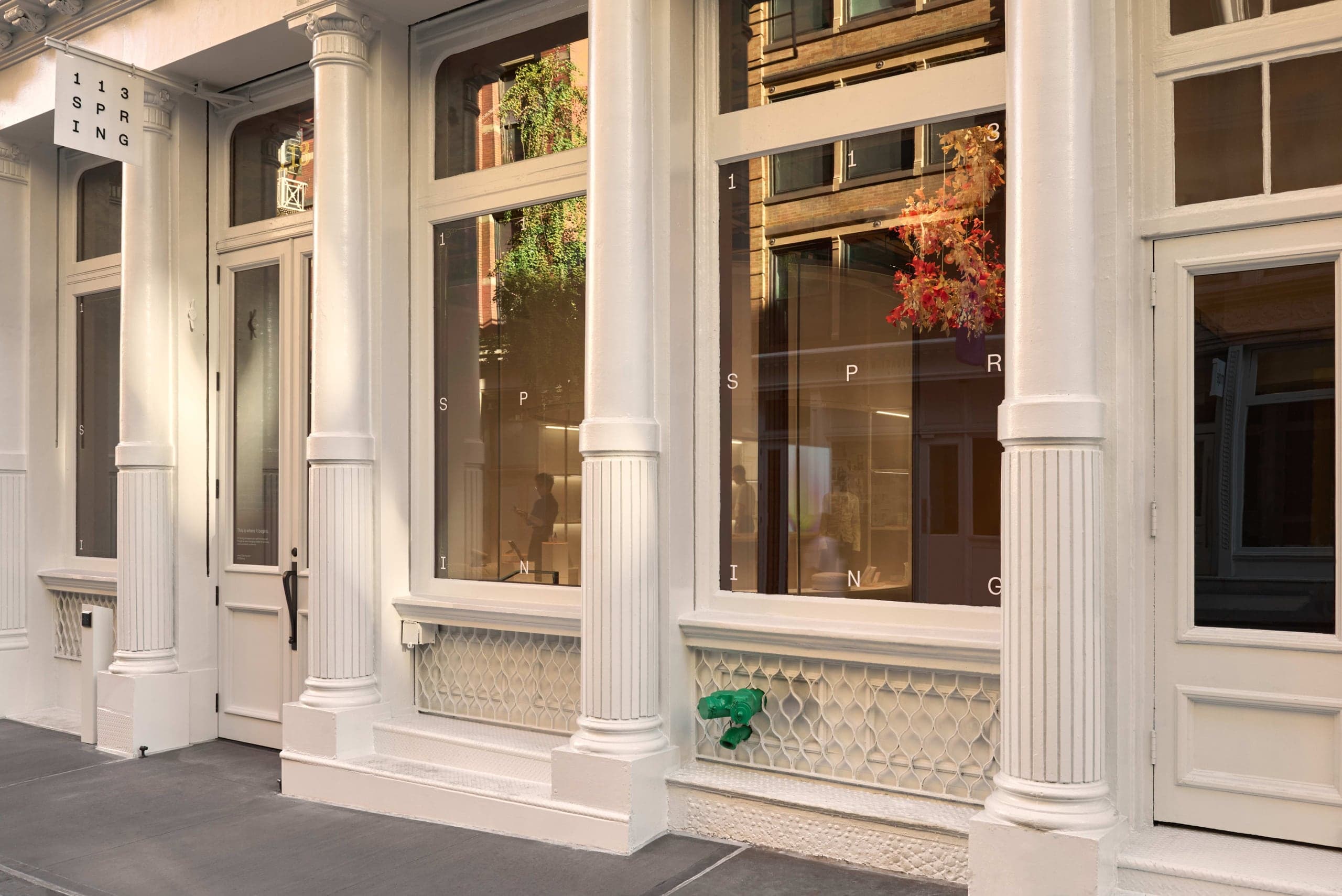
Overview
113 Spring is a flagship retail space built atFIELD.IOfor client113 Spring, designed as a "living laboratory" that evolves with every interaction rather than staying fixed. The space merges flexible architecture with integrated technology across several digital layers: adaptive lighting, responsive sound, personalised scent, tailored welcomes, and continuous brand activations, all orchestrated from a single hub rather than run as separate, disconnected systems.
Created by:FIELD.IOExecutive Creative Direction:Marcus WendtCreative Direction:Justin CrookTechnical Direction:Cornelius CarstensInteraction Design:Raphaël Améaume, Bruno ImbriziDevelopment:Leon Delaimy, Tjaša Šinkovec,Daan Rongen, Bruno Imbrizi
Concept & approach
The brief needed to balance emotional connection with operational efficiency while supporting continuous evolution, so the space was built around adaptive design systems and personalization strategies rather than a single static fit-out.SpringOS, the project's core intelligent system, orchestrates every digital layer from a centralised hub; real-time analytics and a flexible system architecture let the experience keep changing after launch rather than shipping as a finished, unchanging installation. In FIELD.IO's own framing, 113 Spring demonstrates "how spaces can think, feel, and grow."
SpringOS: Spatial Intelligence
The intelligent system underneath the whole space, turning the architecture into what FIELD.IO describes as "a living organism, orchestrating multiple digital layers from one centralised hub." Three capabilities anchor it:live spatial data(sensors build a digital twin of the space, tracking movement and engagement and folding in weather, light and time-of-day data),circadian adaptation(light and sound shift in vibrancy and intensity to follow the body's natural rhythm through the day), andstaff control(an interface lets on-site staff customise, schedule, or override the system for a specific event rather than leaving it fully automated). Real-time analytics on occupancy and engagement feed back into the system, so it keeps learning after launch.
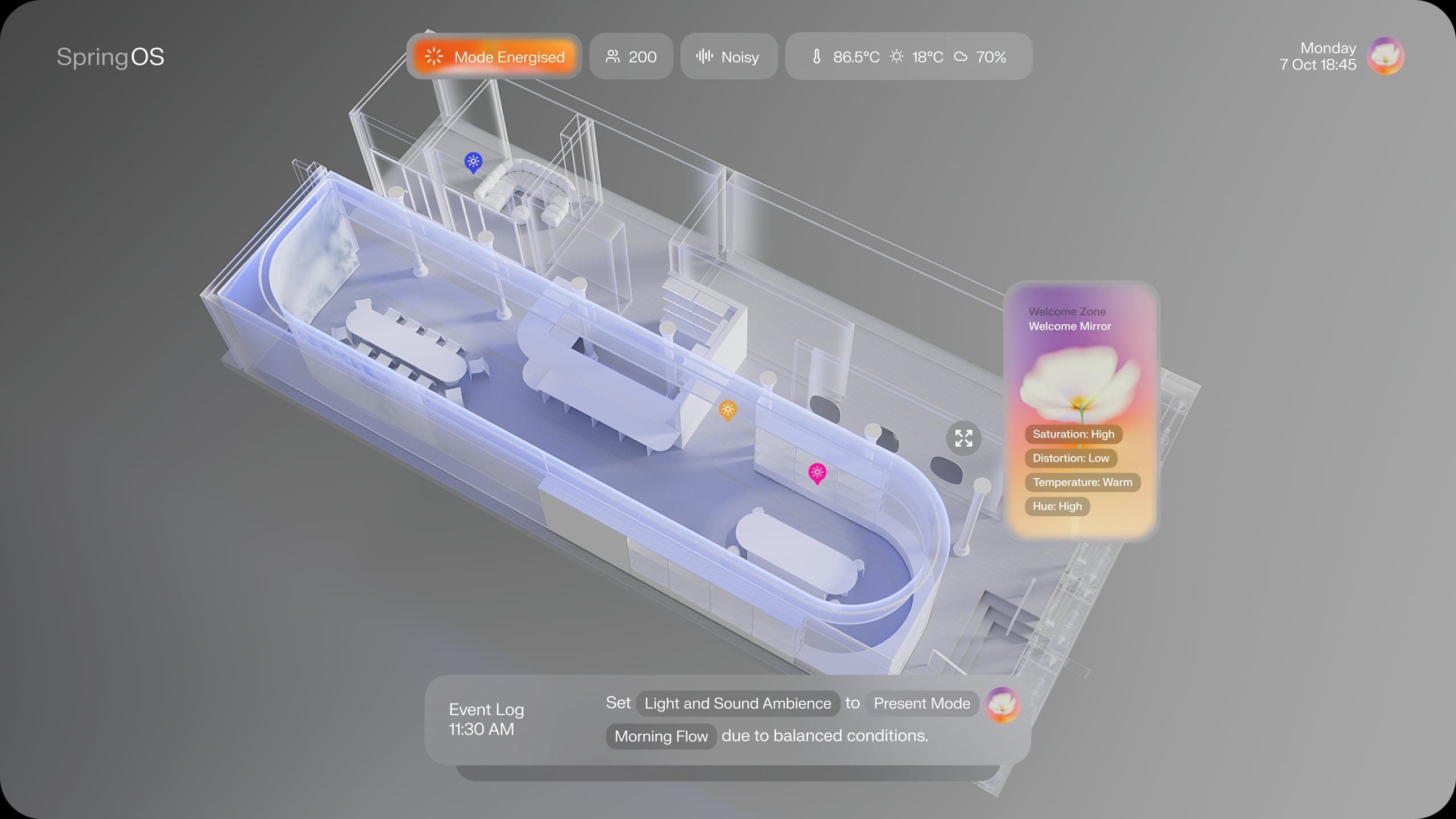
SpringOS isn't shown as a standalone artefact — it runs continuously underneath the physical space, visible only through its effects on lighting, sound and the staff interface.
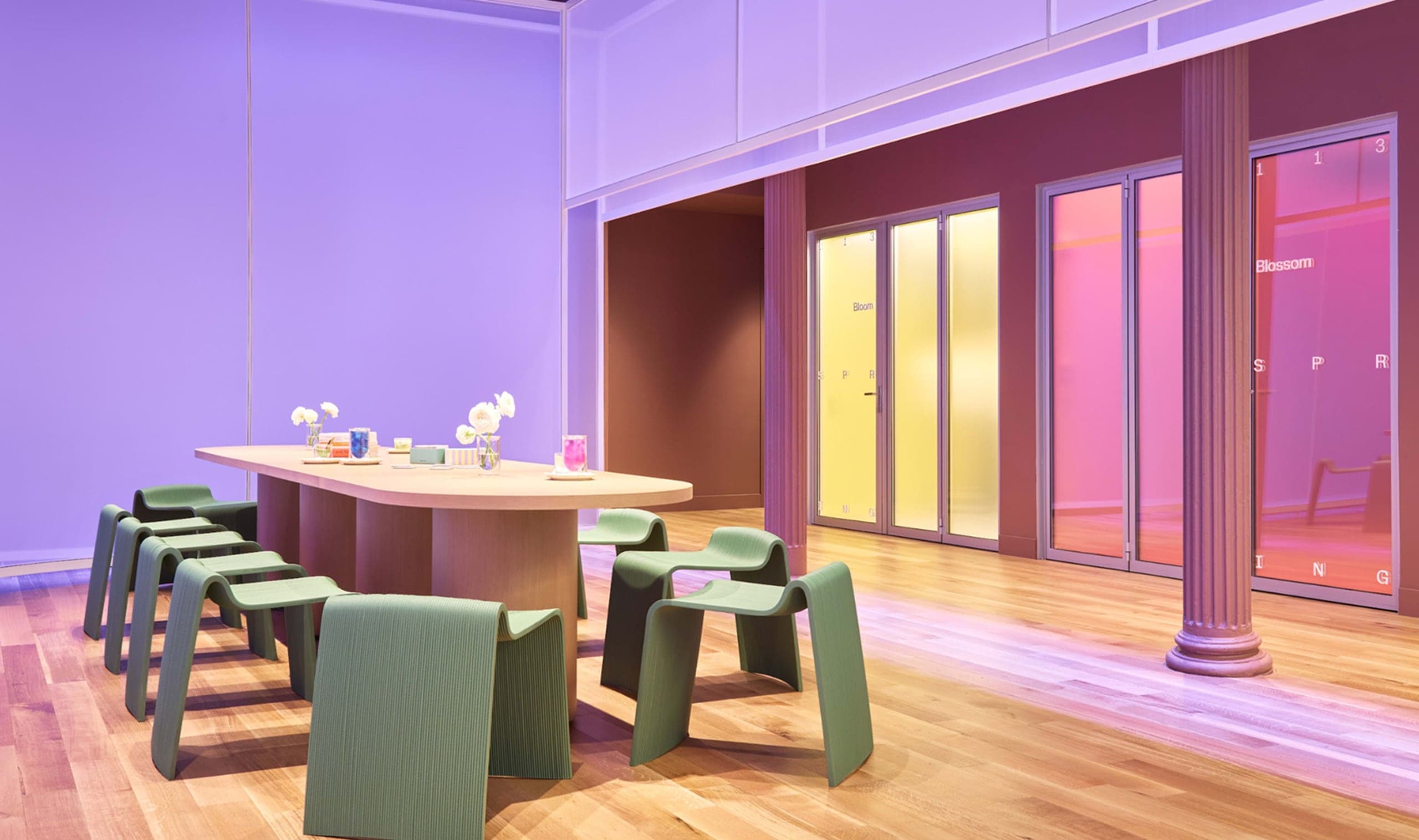
Mind-Scent Product Experience
A real-time installation, credited toDaan RongenandBruno Imbrizi, that translates a visitor's neural signals into a personalised scent artwork. It runs in three phases:Emotional Archetyping(a conversational survey establishes the visitor's "State of Being"),Latent Drift(a Muse EEG headset reads baseline brain activity before any scent is introduced), andEmotive Flux(as a custom scent is experienced, live brain data shapes real-time colour, form and motion). Each session ends with a printed artifact documenting the visitor's Scent Archetype, Latent Drift and Emotive Flux visualisations — turning a digital reading into something physical to take away.
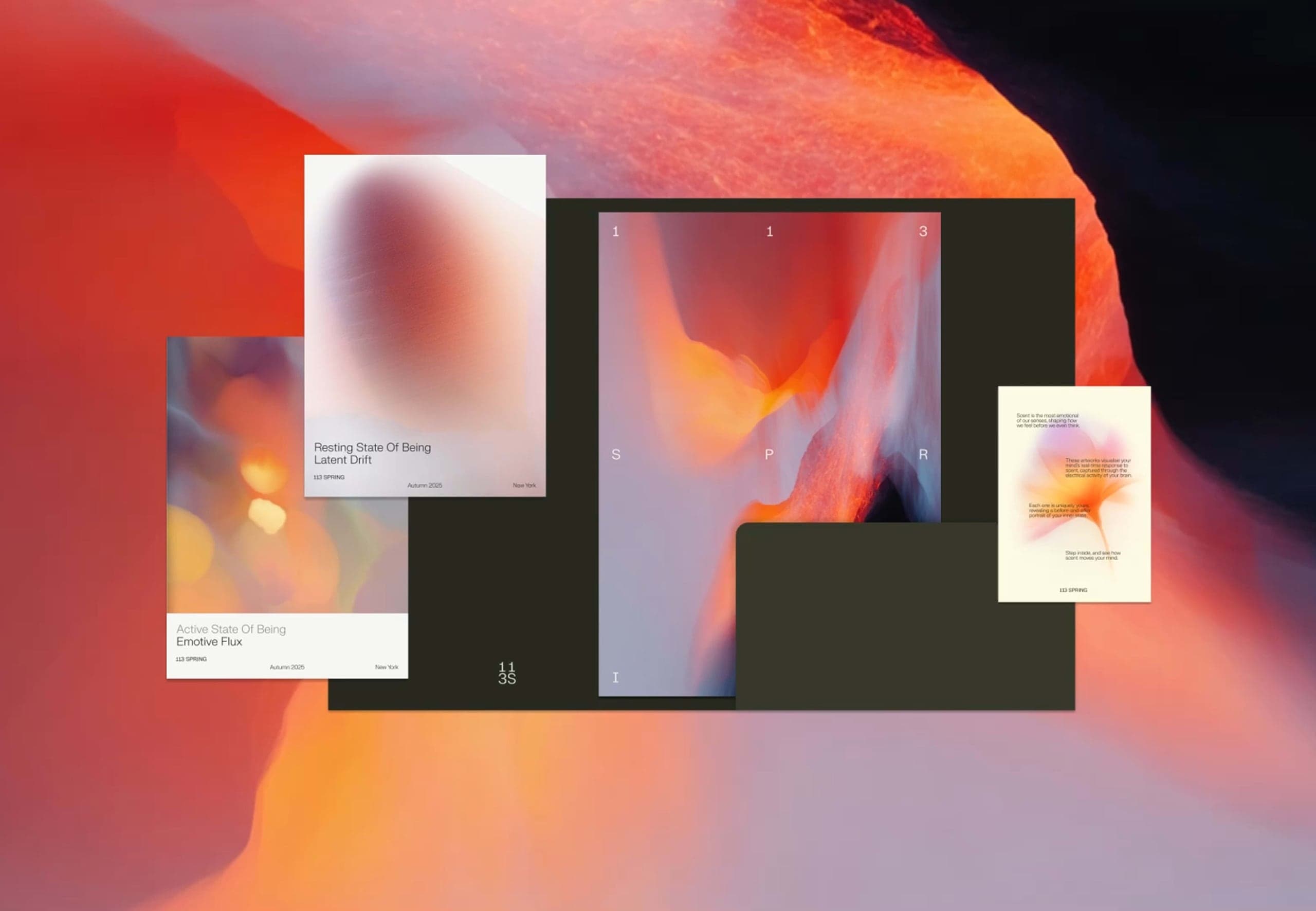
Community Veil
A dynamic visual surface that shifts mood, tone and identity to match each community event or gathering — the same underlying design logic as SpringOS's circadian adaptation, applied to community programming rather than daily rhythm. Shown only through the space itself; the public case-study page carries a hero video rather than static photography.
Digital Mirrors
A set of tailored, personalised welcome experiences for guests entering the space, part of 113 Spring's wider personalisation strategy: "personalisation shapes both guest and employee experience" through adaptive systems feeding from the same spatial-intelligence layer as SpringOS. Shown only through the space itself; the public case-study page carries a hero video rather than static photography.
Generative Brand Expressions
Adaptive design systems enabling continuous brand activations and experiential programming, rather than a fixed identity applied uniformly across the space — the same personalization logic driving SpringOS and Community Veil, applied here to branding. Shown only through the space itself, beyond a low-res hero asset on the public case-study page.