Smart Market
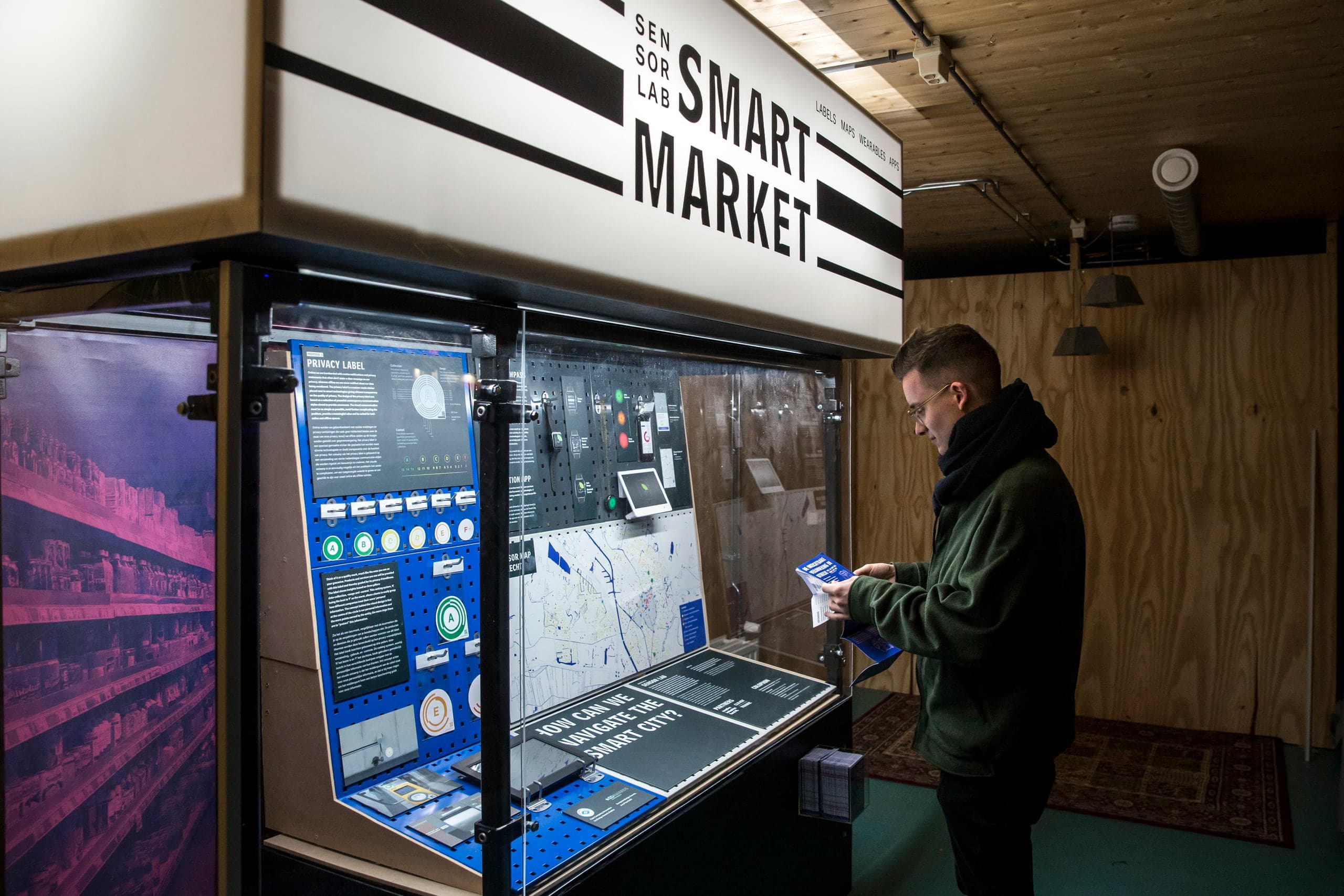
A physical installation for CLEVER°FRANKE, staging a fictional convenience store in a near-future smart city where citizen data-autonomy is the product on the shelves — the culminating exhibit of Sensor Lab's Smart City research programme.
Overview
Smart Market is a physical installation built forCLEVER°FRANKEto close outSensor Lab's research programme on Smart Cities (July–November 2019), client work rather than independent practice. Presented as a fictional convenience store set in a near-future smart city, it puts citizen data-autonomy on the shelves, framing surveillance and consent as products visitors can pick up and examine.
Programme
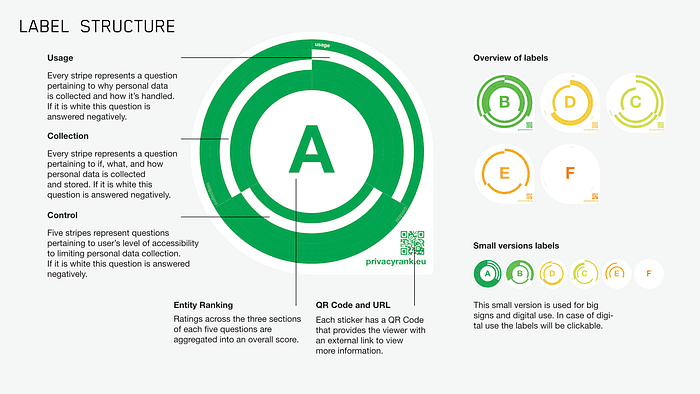
The project grew out of Sensor Lab co-founderGert Franke's essayThe Invisible Revolution, arguing that as society moves online, the merge of the physical and digital world needs to be made tangible and legible to citizens. Community meet-ups and a resident survey found that 66% of respondents had never even heard the term "Smart City" — a gap that shaped five prototypes built over the programme: a Privacy Label, a Sensor Map, a Sensor Compass, a navigation app, and Smart Market itself as the culminating physical exhibit. Research was carried out with fellow Sensor Lab collaboratorsJeremy Raider,Marie-Luise Schlander,Loes Sloëtjes, andJooyoung Park; the Privacy Label prototype went on to win aGold Jury Prize at the European Design Awards.
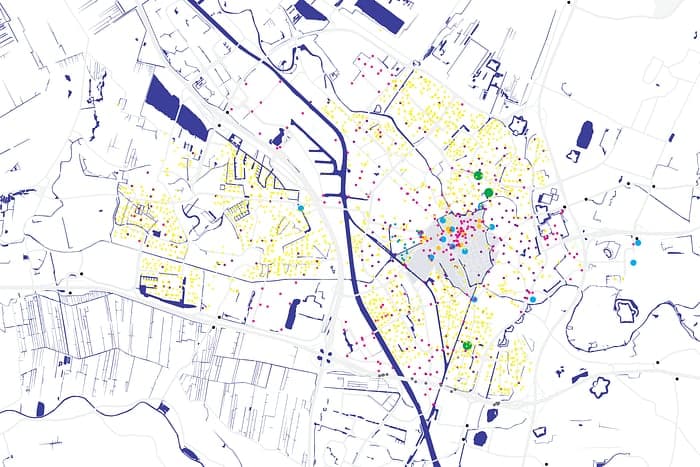
Two further prototypes mapped that same transparency problem onto physical space: a Sensor Map visualising the density of smart-city sensors across a neighbourhood, and a Sensor Compass giving residents a directional read on the data collection happening around them.
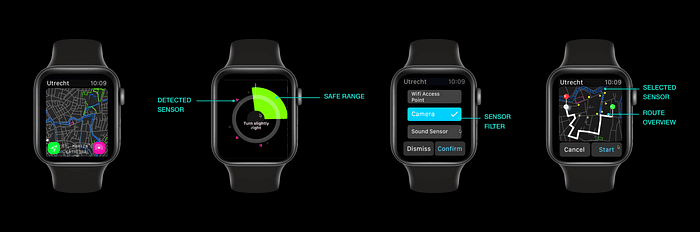
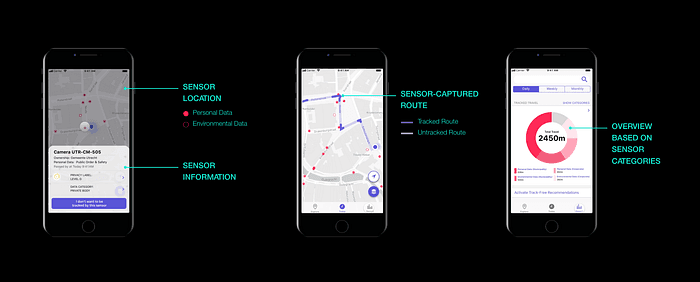
A fifth prototype, a navigation app, rounded out the programme's five deliverables before Smart Market itself closed it out as a physical exhibit.
Concept
The store's "product range" consisted of technologies that give citizens transparency over, and autonomy over, their own data engagement — surveillance and consent rendered as retail goods rather than abstract policy. It was shown atCirque du Data, a Data Circus event exploring the digital transformation of urban living environments.
Design & construction
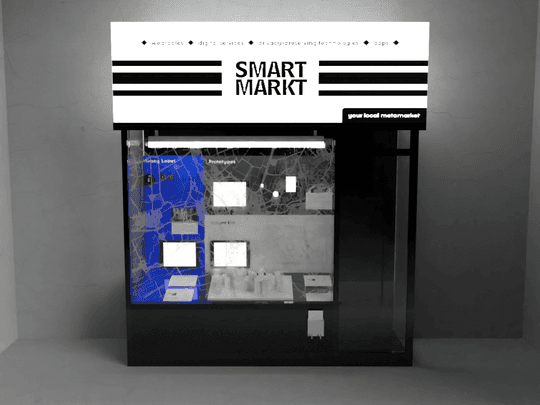
The installation was modelled in 3D before construction began, working through spatial layout and material choices digitally first.
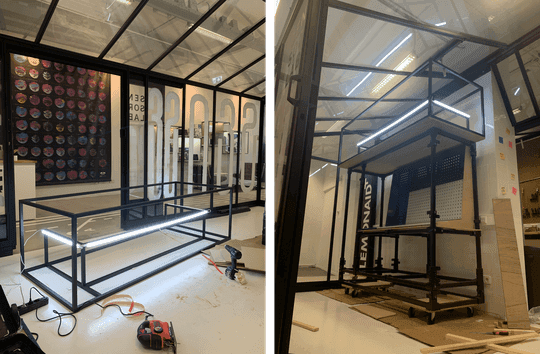
The final structure was built from a steel frame topped with opaque plastic sheeting and LED tubes: clean, minimal, and deliberately clinical, matching the retail-as-surveillance framing.
Launch
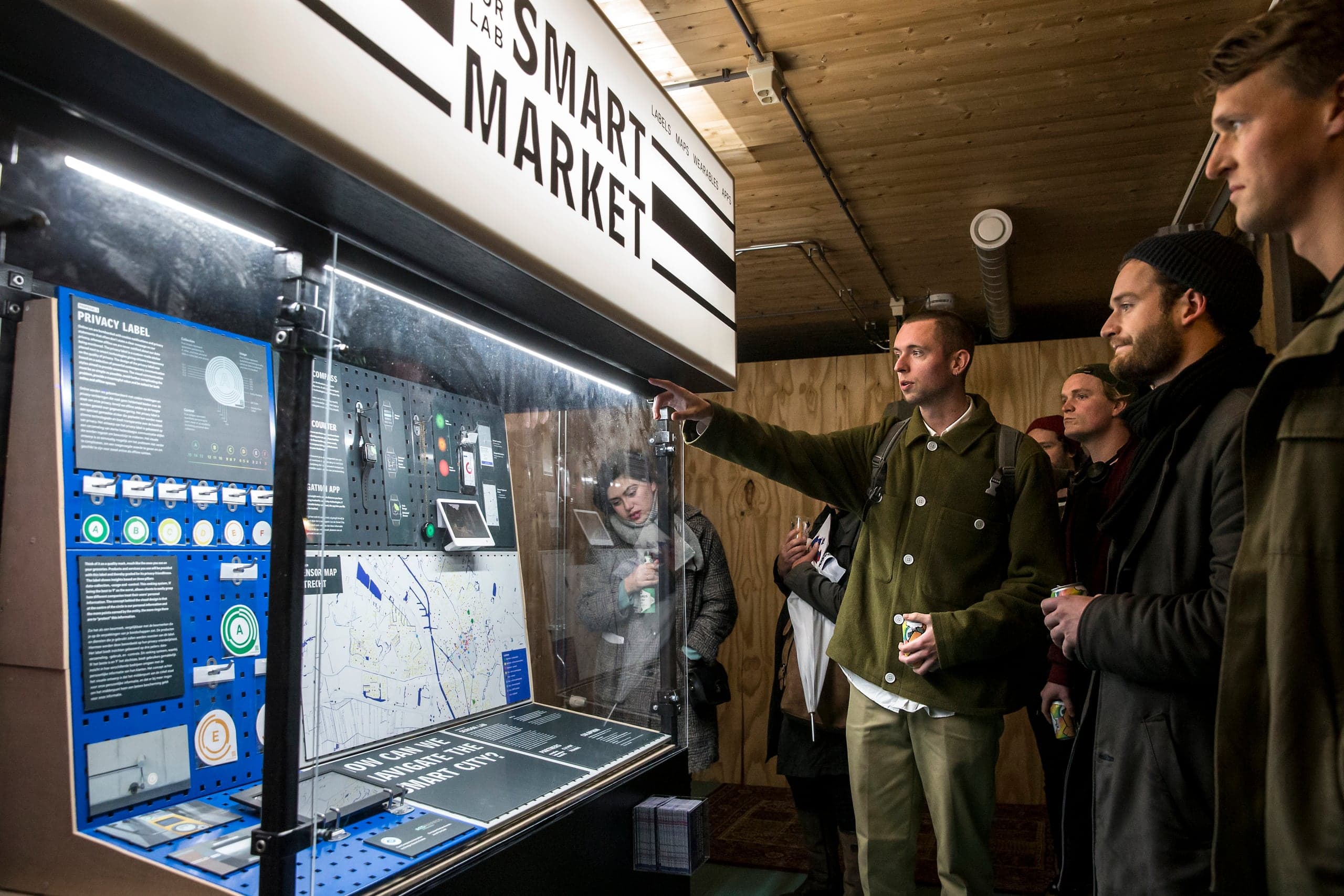
Smart Market drew a steady crowd throughout Cirque du Data. Sensor Lab co-founder Gert Franke presented the installation directly to visitors as part of the programme.
The illuminated kiosk sign became part of the draw itself, pulling a steady stream of visitors in from the wood-panelled entrance throughout the event.

Reflection
Smart Market's argument works because it doesn't editorialise — putting data-autonomy technologies on a shelf, lit like retail goods, lets visitors draw the surveillance-as-commerce conclusion themselves rather than being told it. The same instinct, transparency over mandate, runs through its four sibling prototypes: a nutrition label for data instead of policy text, a map and compass for sensing infrastructure instead of a terms-of-service document.