WiFi Fields
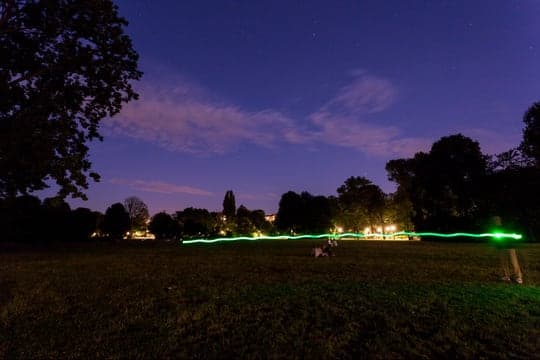
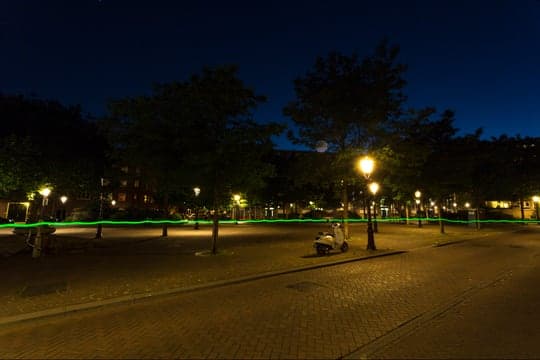
A handheld WiFi flashlight whose brightness is driven by live signal strength, long-exposure photographed to paint an invisible network's shape into light.
Overview
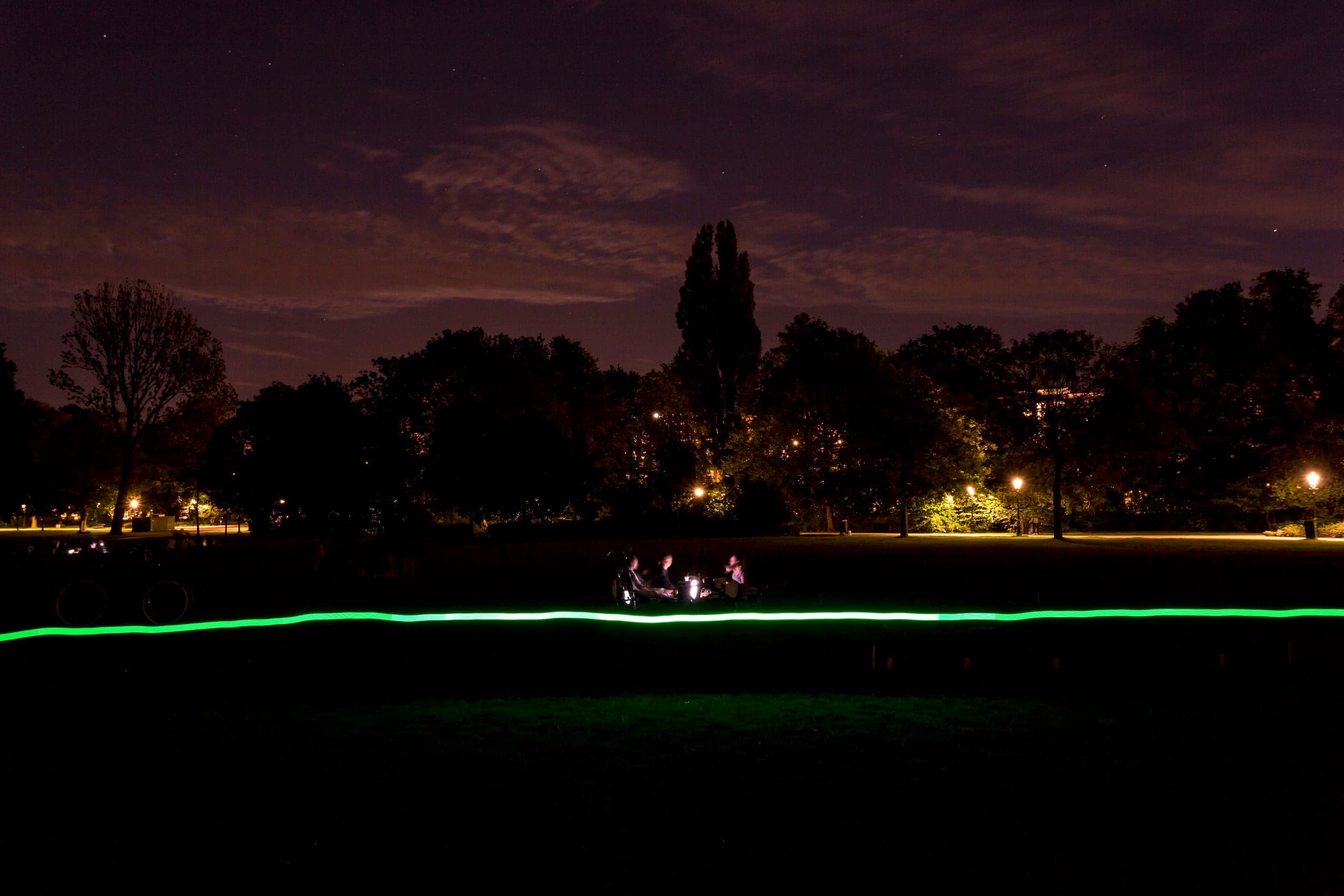
WiFi Fields is a physical-computing photography technique: a handheld "WiFi flashlight" whose LED brightness is driven live by measured WiFi signal strength, walked through a scene during a long camera exposure so that the invisible, fluctuating strength of a WiFi field becomes a visible streak of light in the resulting photograph. Made in collaboration with Amsterdam-based photographerLuc Wittebol.
Concept & motivation
WiFi is nearly everywhere: homes, transit, public space, cafés, always one click away, yet entirely imperceptible: human senses simply can't register the statically charged and discharged electromagnetic particles that carry it. This project makes that invisible infrastructure visible, and carries a second, more pointed theme underneath the technique: the omnipresence of information surrounding us at all times, and, since much of the WiFi this device measures is free, corporate networks in public space, a quiet reminder of the privacy implications of using it.
Hardware
The flashlight is built on an Arduino MKR-family board with WiFiNINA, an Adafruit NeoPixel strip, and a 16x2 LCD readout.WiFi.RSSI()reads the signal strength of the currently associated network, linearly mapped from a -80 to -20 dBm range (typical weak-to-strong WiFi bounds) onto an LED brightness of 0 to 200. A button toggles between a home screen, white light, showing the connected SSID, and measuring mode, which drives the NeoPixels in green, scaled live to the RSSI reading.

Development
The build and its calibration happened quickly and in the
Presentation
The result is a photo series, shot with long exposures at night: as the flashlight moves through a scene, its brightness, driven live by the WiFi signal at each point along its path, becomes a continuous line of light recording that signal's strength across space.