Painted Observations
A series of eleven paintings on human/AI juxtaposition, framed in neoclassical-style ornamental frames generated and digitally fabricated through a custom displacement-mapping pipeline.
Overview
Painted Observations (its GitHub repo spells it "painted-observations"; the README calls it "Painting Observations," provisional title either way) pairs eleven paintings by a collaborating painter with digitally-fabricated, neoclassical-style ornamental frames that Daan designed and generated himself. Each painting sets a traditional, figurative craft, painting, against some facet of an AI-inflected society: a modern-hospital nativity, a VR theatre, an AI politician, drone-scarred warzones, vertical farms run by algorithms. The frames borrow their ornamental language from 18th-century Neoclassicism (the README cites Winckelmann's writing on "noble simplicity and calm grandeur") and are produced through 3D printing and casting, generated procedurally rather than carved by hand: the same tension between old craft and new technology that the paintings depict is built into how the frames themselves are made. All process files are dated8–16 February 2023. The collaborating painter contributed this reflection in the project's README:"I wanted to make eleven works because eleven is a prime number and because the fascination of humans with mathematics is engraved in us... About us, what we create and its contradictions is what this body of work is about."
The eleven works:Betlem(the birth of Jesus in a modern hospital),Screens(dating-app algorithms and internet romance),Midas,Pericles 2.0(an AI politician),L'Artiste(an artist using AI as an expressive tool),Hitchcock(a VR theatre),Very Deep Blue(human-versus-AI game competitions),WAR PAINTING(a drone-scarred warzone landscape),Fields(AI-managed vertical farms),Transport(a highway of autonomous vehicles), andFord 2.0(AI robotics in industrial labour).
Concept & approach
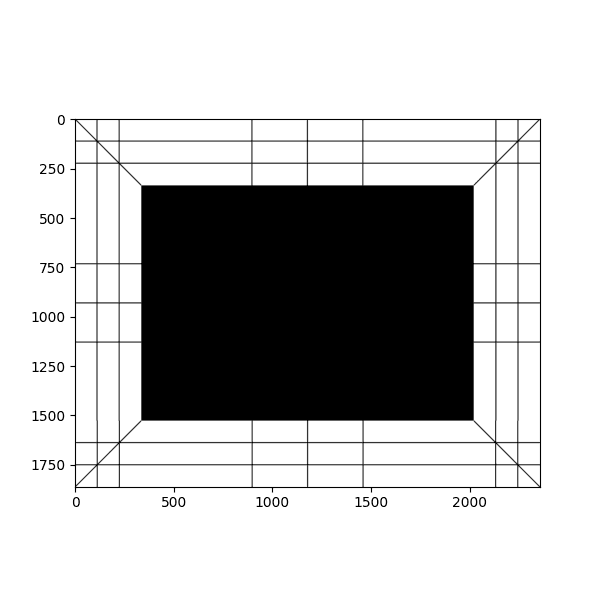
The frame-generation pipeline (construct.py/displace.py, usingbpyin Blender and Daan's ownmaculalibrary for the 3D geometry, plusopen3dfor the displacement step) works in three visible stages. First, the border geometry is measured and gridded out around the central panel. Second, that border is filled with a smooth black-to-white gradient running along each edge, which is the actual height data that drives the neoclassical ornamental displacement.
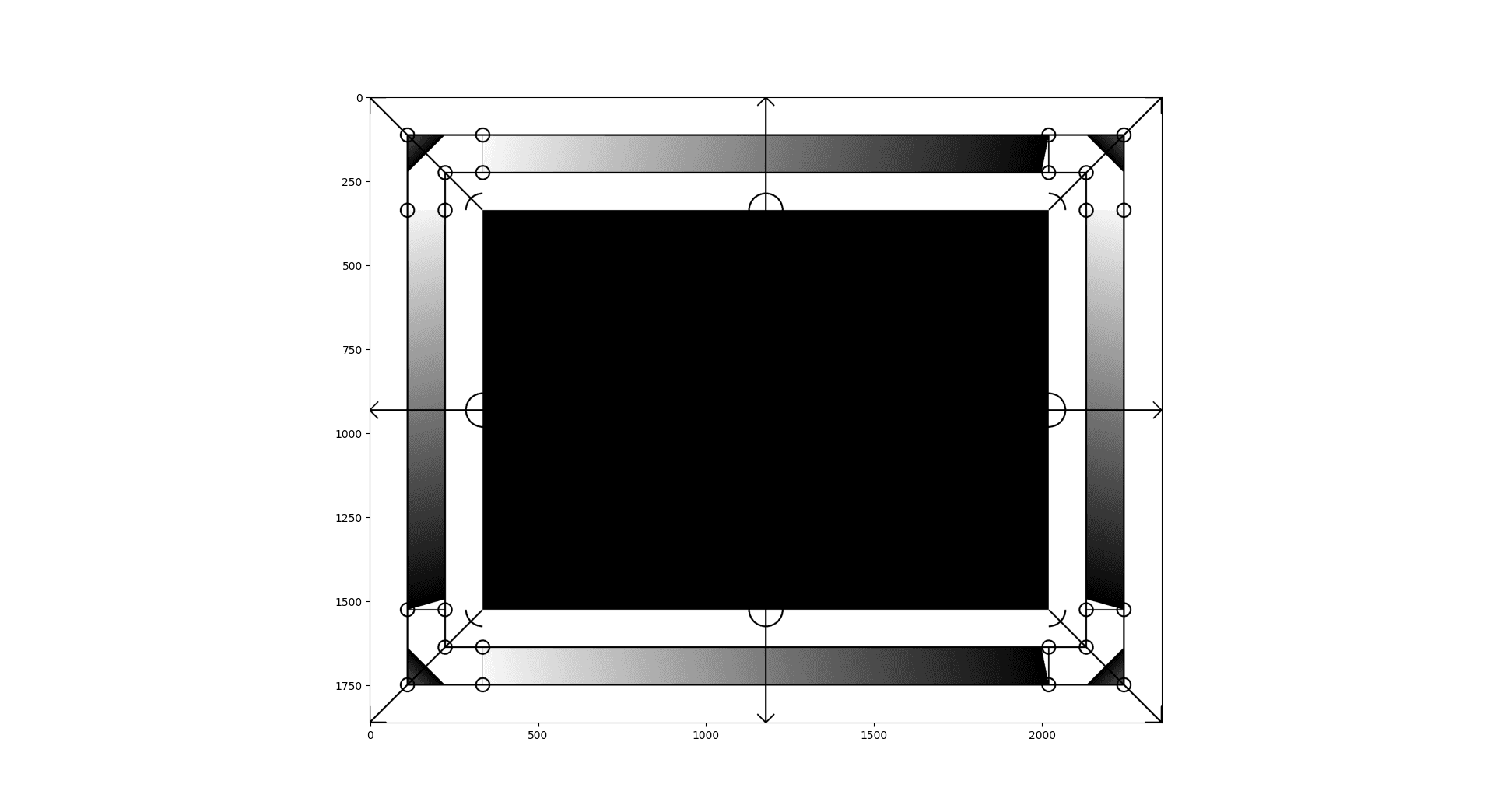
Third, that gradient is read as a height map and rendered as a 3D mesh: a flat blue panel in the centre, ringed by rising bands of orange and red, capped with a thin cyan edge, that read as a woven or quilted border raised up from a flat base.

Reflection
The surviving files stop at the frame-generation pipeline itself, the measurement, gradient, and displacement-preview stages plus the exported.objmesh, rather than a photograph of a finished framed painting. The project's real center of gravity is the collaboration: a painter working figuratively on AI-and-society themes, paired with a generative, digitally-fabricated revival of a 250-year-old ornamental language.