Keynote on Internet Art
A main-stage "Mystery Guest" talk at Smashing Conference 2020, arguing that designers and developers are both practicing a single craft, and that fighting "Design Sameness" means becoming a digital artisan.

Overview
Delivered as the conference's "Mystery Guest" slot on the main stage of Smashing Conference 2020, fromHet HEMin Amsterdam, a former military factory now home to a contemporary-culture museum, rather than from home, a location chosen deliberately: the talk opens by noting this isn't "my house," and the venue's own renaissance from factory to culture space mirrors the talk's argument. At the time I was working as a frontend developer atCLEVER°FRANKE, making custom data-visualisations for the web, a fact I opened the talk with directly.
The talk, titled "SmashCon - Digital Renaissance," argues that the industry's habitual "designers versus developers" divide is less useful than their shared underlying practice: the craft of digital creation. Rather than "craftsman," a gendered term, the talk proposes"digital artisan"as the name for that shared practice, and spends the rest of its hour trying to convince the audience there is one inside them.
Argument: Design Sameness
The talk's central complaint is"Design Sameness", a term borrowed from designer Stephen Hay ("We are developing expertise in choosing rather than in thinking"): the web's interfaces increasingly converge on the same look, driven by a handful of large companies' design systems and, increasingly, AI design tools (the talk cites an early Figma plugin using GPT-3 to generate interface designs from a text prompt). The risk isn't just visual monotony, it's that Design Sameness narrows what an entire industry is even capable of recognising as beautiful.
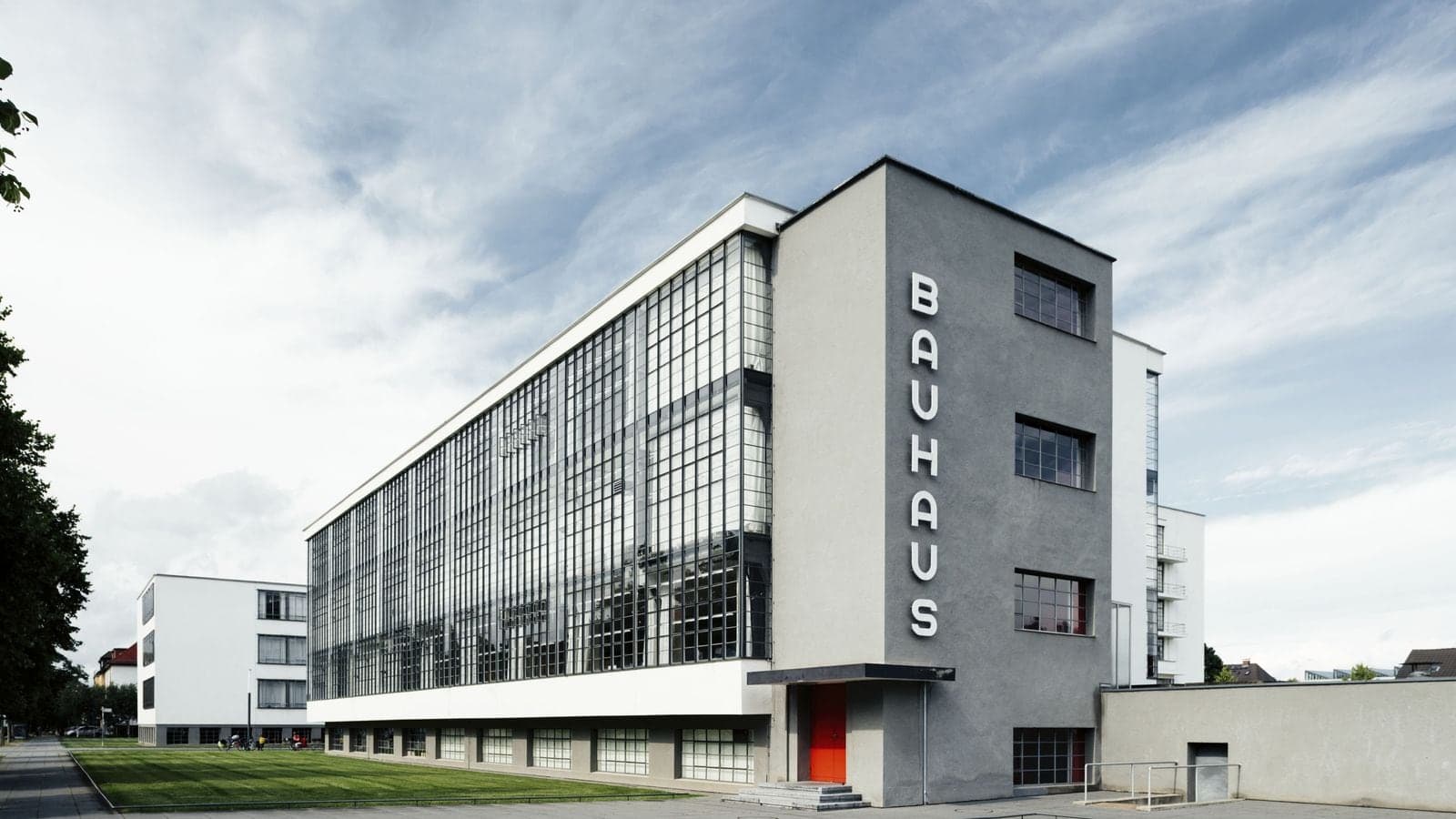
The historical counter-example isBauhaus: Walter Gropius's curriculum moved students from wide general study (nature, fabrics, tools) through means (stone, colour, wood) to concrete construction, producing practitioners as different as furniture designer Marcel Breuer and colour theorist Paul Klee.
Breuer's Wassily Chair (1925) marked the beginning of modern furniture design, and the talk frames him not as "known for making chairs" but as "practicing the art of making chairs," the same generalist framing it wants applied to web work.

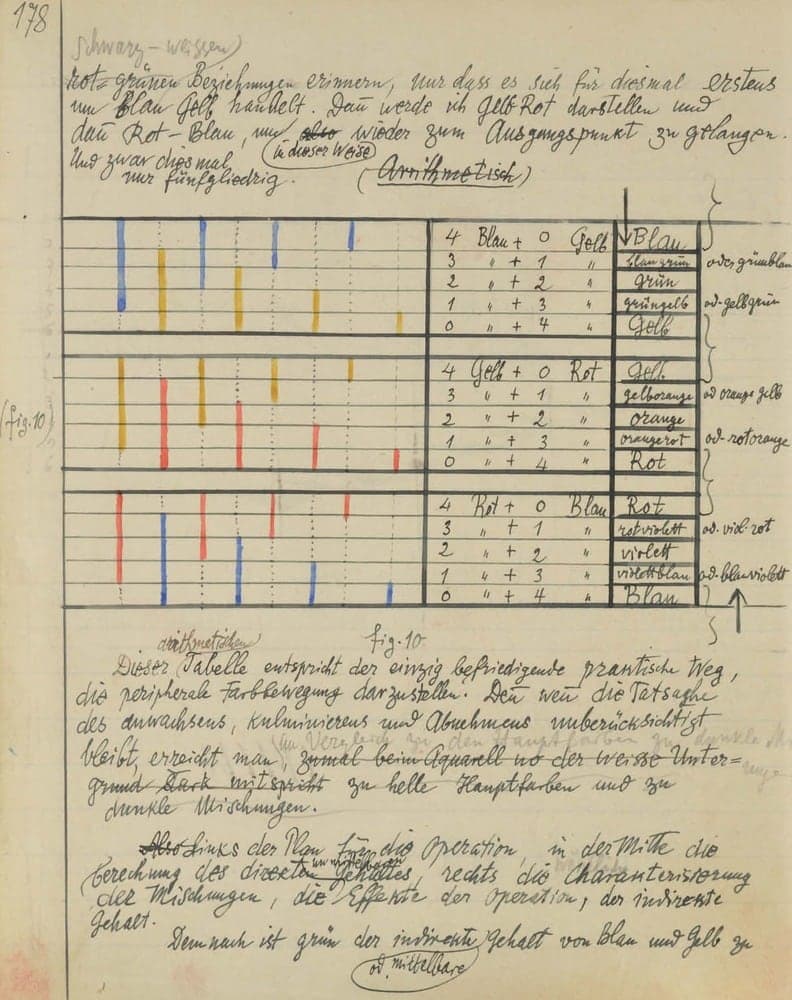
Klee, teaching at the same school, was applying mathematics to colour to build scales and minimalistic compositions, and the talk puts his handwritten notebook pages from the early 1900s directly beside D3'sd3-scale-chromaticcolour-scheme module, arguing the visual resemblance isn't coincidence: Klee's studies still underpin how the web-industry generates and reasons about colour today.
The talk's proposed fix for Design Sameness is the same generalist move: atech-generalistwho designs by coding, rather than treating design and development as separate job roles. Bauhaus was a hundred years ago, the talk argues, but the same materials-tools-engineering-and-making relationship still sits at the centre of digital work; the industry's current split into design specialists and programming specialists is a choice, not a necessity.
Three methods
The talk's practical core is three methods for coding creatively:
- Experimental programming — asking a question of your medium instead of designing a solution in advance. The example given is Figma's own origin story, quoted directly from its about page: "A weekend of playing around with WebGL's image processing capabilities..." became the founders' inspiration for the whole product. This is contrasted with a live demo of my own portfolio site at the time: a joke search bar that ran any query through an NLP keyword extractor, fetched a matching Giphy GIF per keyword, and plotted a nonsense D3 line-graph over it, guaranteeing every visitor "finds" a made-up project no matter what they type.
- Design-by-coding — designing directly in the browser rather than in a visual editor first, illustrated with Reddit's collaborative canvas experiment "Place" (2017): a million users choosing from a 16-colour palette to assign one pixel at a time, with a per-user cooldown between placements, read simultaneously as an engineering problem (a giant <input type="color"> plus x/y coordinates, a database, and per-user timers), an interaction-design problem, and a work of art.
- Art research — treating code without a fixed function as still having a purpose, citing Joan Heemskerk & Dirk Paesmans' deliberately illegible data visualisation (x20xx.com/tide.html), explicitly compared back to Klee's Bauhaus notebook pages as another example of art functioning as experiment, and Ian MacLarty's "If We Were Allowed To Visit," which renders Gemma Mahadeo's poetry as a navigable 3D world built from pre-rendered texture atlases.
Presentation
Delivered live to the Smashing Conference audience on 8 September 2020, from a deck titled "SmashCon - Digital Renaissance" (Keynote file) with an accompanying narrative script written the day before. Both exist as local files only (SmashCon - Digital Renaissance.key,Narrative.pdf); there is no public recording.

Reflection
The talk's closing line, that disincentivising experimentation because "the high costs of production have stifled creativity" (Joel Waldfogel) makes an industry's process less efficient, not more, holds up as the actual thesis: separating design from development doesn't protect craft, it just guarantees everything ends up looking the same.